I haven’t seen anyone mention this little CSS tip. All the proprietary vendor-specific placeholder rules now safely can be replaced with just ::placeholder. Seems very useful especially with the ever-increasing emphasis on site performance. The end result is less code and thus faster loading, better SEO and so forth. Continue reading »

Everyone knows that slow loading and/or insecure websites are horrible, just the worst to be avoided at all costs. But there are other, less obvious ways to destroy the user experience and well, just make things suck in general. The goal here is to raise awareness and have some fun. So without further ado, here are my top 10 weird ways to ruin your website, along with their real-world equivalents.. Continue reading »

This post explains all the different “x” characters currently available in HTML. It covers the various HTML entities and provides some examples and tips. Also explains the difference between the often confused “Multiplication X” and “Multiplication Sign”, and which is better for symmetrical buttons and links. Continue reading »

I’ve always made use of CSS text-decoration properties in my theme designs and other dev work. From underlining text to making hyperlinks look great, text-decoration is essential CSS. Until recently I was not aware of a couple of related properties, text-underline-offset and text-underline-position. I am currently planning the next redesign of Perishable Press and thinking about using text-underline-offset to add some style to various link elements. So this post is to bring these related CSS properties together on paper, forever […] Continue reading »
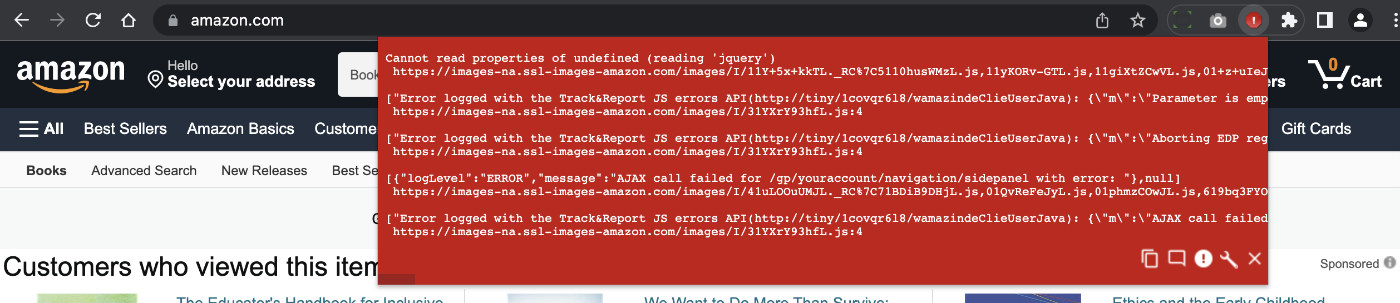
Heads up about the JavaScript Errors Notifier extension for Google Chrome. Looks like it was removed from the Chrome store sometime last year. Not sure of the reason behind it, but can tell you that currently there are no suitable extensions to replace it. Kinda sucks because JavaScript Errors Notifier was one of my favorite “always on” extensions. It makes it easy to spot any JavaScript errors as you develop, design, or browse the Web. Fortunately there’s still a way […] Continue reading »

I’ve tried 1Password and Dashlane, and several other popular password managers for both Mac and PC. It always seems to be the same thing: things start off great and then go downhill from there. For example, I was loving 1Password, and then it locked me out of my password file/account. Likewise for a couple of years Dashlane was great, but then they started making drastic changes like moving from standalone app to browser extension Web-based UI. The confusion involved with […] Continue reading »
There are numerous ways to redirect requests using Apache’s mod_rewrite and mod_alias. This concise, friendly tutorial explains different ways to redirect a range of IP addresses, either IPv4 or IPv6. Continue reading »

Finally! Writing this post is the final step in the 2021 redesign of my WordPress plugins site, Plugin Planet. The site launched seven years ago in 2014. I think I spent a couple of months or so building the original site to the best of my ability. That first design stood the test of time, and honestly it would have been fine for another couple of years or more. But after seven years of changes, modifications, swapping out plugins, adding […] Continue reading »
Working on the redesign of Plugin Planet, I needed a way to toggle between two divs based on which radio input is selected. This is useful for showing option-specific information conditionally, depending on the current active radio select field. This tutorial shows how to achieve it using vanilla JavaScript, so there is no need for including an entire library like jQuery. Very simple technique, requiring minimal amount of HTML markup and vanilla JavaScript. Continue reading »
Let’s say you have some .htaccess rewrite rules in place using Apache’s mod_rewrite. By default if the rewrite rules are located in the root directory, they will be applied to every subdirectory, as expected. But what if you need to disable the rewrite rules so that they do not affect some specific sub-directory or sub-folder? This super quick tutorial shows the easiest way to do it. Continue reading »

Have you ever wanted to make a WordPress site private? So that only specific users are allowed access? For example, for my found-images site eChunks.com, I decided to require user login in order to access any content. So now for that site, public access is not allowed, and any posts, images, and all other content is available only to logged-in users. This tutorial explains four ways to make a WordPress site private or members only, so that only authenticated/trusted users […] Continue reading »

By now most have heard about the WP Sitemaps feature introduced in WordPress version 5.5. From what I’ve read most existing sites that needed a sitemap already had one via one of the many free sitemap plugins. But for new WordPress sites going forward, having all the sitemap code in the WordPress core now means that new sites have the option of rolling with the default WordPress sitemaps, or use a dedicated plugin to do the job. This post is […] Continue reading »
Here is a quick CSS tutorial showing how to center-align a list element with left-aligned text. For example, if you have an <ul></ul> or <ol></ol> of unknown width, and you want it to stay centered on the page and keep the inner text aligned to the left. That’s the trick we’re looking at in this tutorial. Continue reading »
![[ Perishable Press Books (screenshot) ]](https://perishablepress.com/wp/wp-content/images/2020/books-homepage.jpg)
After six months of on-again, off-again hard work (and plenty of unexpected challenges), I am excited to launch the new Perishable Press Bookstore. The old bookstore was located on a separate domain, but I wanted it to be better integrated with the main site here at Perishable Press. So now there is the site blog at perishablepress.com and the store at books.perishablepress.com. Continue reading »
It is debatable whether or not Chrome’s new scrolltotextfragment feature is a significant security concern. When in doubt, play it safe. This quick post explains how to disable (or enable) Chrome’s scroll-to-text-fragment functionality. Continue reading »
The ones I know of: ads.txt humans.txt robots.txt security.txt This site makes use of robots.txt and humans.txt. I don’t need ads.txt because 3rd-party ads aren’t currently running on the site, and security.txt seems not necessary as the site’s contact form is easy enough for anyone to find. Continue reading »

 Perishable Press is operated by Jeff Starr, a professional web developer and book author with two decades of experience.
Here you will find posts about web development, WordPress, security, and
Perishable Press is operated by Jeff Starr, a professional web developer and book author with two decades of experience.
Here you will find posts about web development, WordPress, security, and