In case you hadn’t noticed, I’m on another one of my posting sprees. Going through the past year’s worth of half-written drafts and collected code snippets, and sharing anything that might be useful or interesting. Here is a bit of .htaccess that brings together several redirection techniques into a singular plug-&-play code snippet. Continue reading »

I’ve written many articles about how to redirect requests. Even so, I still get questions about how to set up a simple HTTP request router. As in you want to redirect or route all requests to some file or location. This is useful for building CMSs and scripts that handle traffic. For example, WordPress uses a simple request router when permalinks are enabled. For this tutorial, we’ll set this up using Apache/.htaccess and PHP. Continue reading »

Prismatic is a free WordPress plugin that adds syntax highlighting to code samples. You can use either Highlight.js or Prism.js to make your code snippets look amazing. By default, Prismatic highlights code snippets in both post content and post comments. This quick tutorial shows how to disable highlighting in post comments by adding a simple code snippet to your WordPress. Estimated time to complete ~2 minutes. Continue reading »
Prismatic is a free WordPress plugin that adds syntax highlighting to code samples. You can use either Highlight.js or Prism.js to make your code snippets look amazing. This quick tutorial shares a way to customize Prismatic to save time scrolling thru a bunch of language options. Huge time-saver and simple to implement in a few minutes. Continue reading »
![[ Protect WordPress Media Files ]](https://perishablepress.com/wp/wp-content/images/2019/wordpress-media-library.jpg)
This is an experimental technique that I am playing with. It’s the simplest possible way that I could think of to protect all files in the WordPress Media Library using only Apache/.htaccess. I’ve been testing the code on an image-heavy site and so far there are no issues. So I want to put the code out there for others to test and hopefully provide feedback if anything less than perfect. It’s a super simple method that prevents media files from […] Continue reading »
There are numerous ways to redirect requests using Apache’s mod_rewrite and mod_alias. This concise, friendly tutorial explains different ways to redirect a range of IP addresses, either IPv4 or IPv6. Continue reading »
Google has another new thing they are doing, called FLOC (Federated Learning of Cohorts). It’s used to — surprise — track user activity across websites. Opting out ideally is handled by the user, who can customize their browser settings to disable FLOC while surfing around the Web. Beyond configuring your browser to opt-out of FLOC, you can disable it on any website with a single line of code. Continue reading »
Let’s say you have some .htaccess rewrite rules in place using Apache’s mod_rewrite. By default if the rewrite rules are located in the root directory, they will be applied to every subdirectory, as expected. But what if you need to disable the rewrite rules so that they do not affect some specific sub-directory or sub-folder? This super quick tutorial shows the easiest way to do it. Continue reading »
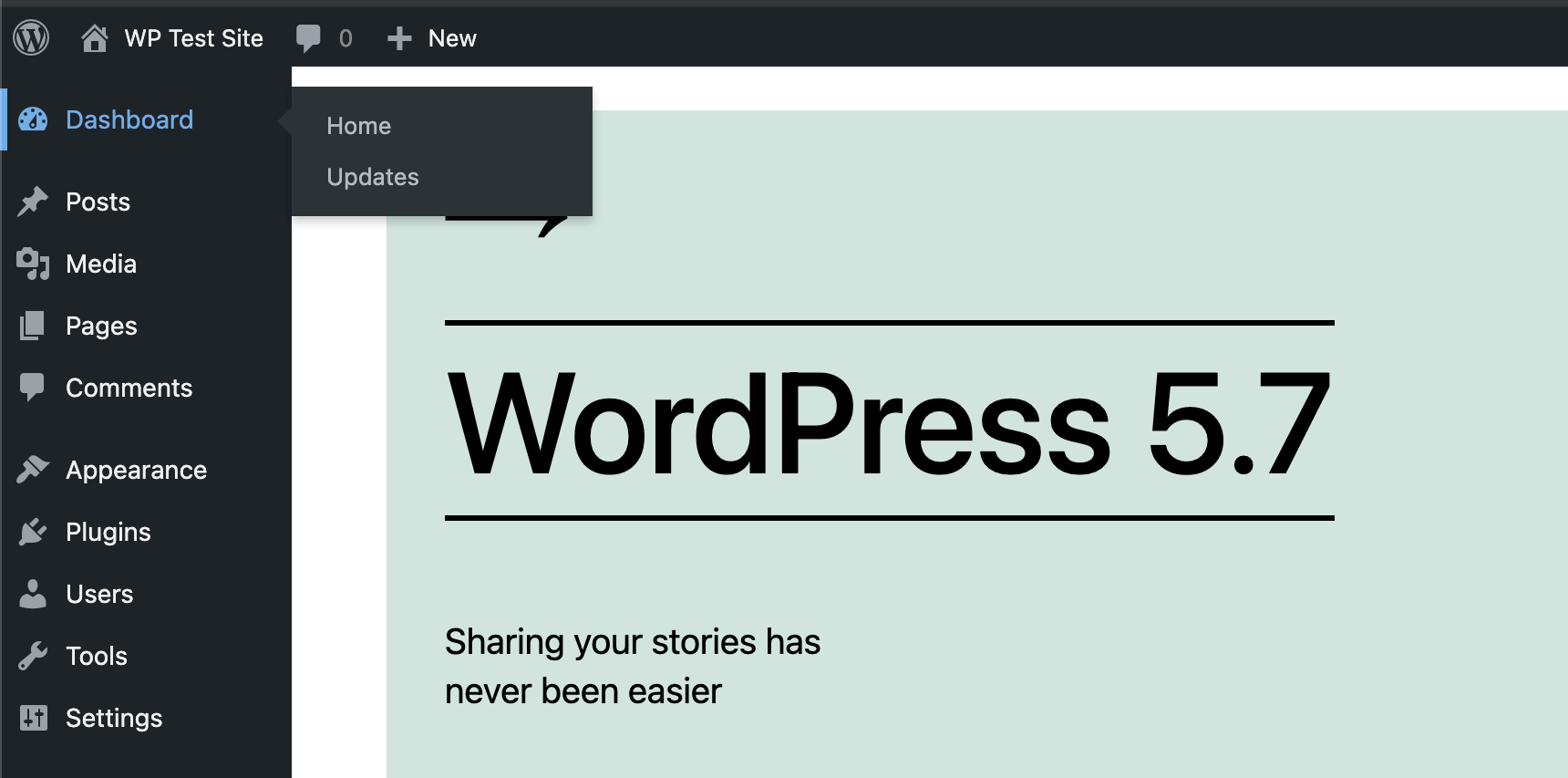
I’ve been testing the beta for WordPress 5.7. So far no complaints but there is one weird thing it looks like they are adding, some weird 4-pixel width border that displays when you hover over any item(s) on the main WordPress menu. It’s even got a transition animation to make it feel extra wonky. Here is a screenshot for those who have not yet had the pleasure of experiencing the new stylez (look on the left-hand side of the menu, […] Continue reading »

After several months of development, the official Nginx version of the 7G Firewall is out of beta and ready for public use. If you are not familiar with 7G Firewall, check out the documentation for the Apache/.htaccess version. The Nginx version of the 7G Firewall works the exact same way, so I won’t bother repeating everything here. The only difference is the implementation, how to set it up on an Nginx server, which is explained in this post. Continue reading »

Have you ever wanted to make a WordPress site private? So that only specific users are allowed access? For example, for my found-images site eChunks.com, I decided to require user login in order to access any content. So now for that site, public access is not allowed, and any posts, images, and all other content is available only to logged-in users. This tutorial explains four ways to make a WordPress site private or members only, so that only authenticated/trusted users […] Continue reading »

Pleased to announce that the 7G Firewall is updated to version 1.3 (September 3rd, 2020). Now available for download, 100% free and open-source as always. Continue reading »
The 7G Firewall was released about a year ago as beta, and has had time now to mature/develop into a stable release. So this is just a heads up that 7G is now officially out of beta and ready for use in live/production environments. Continue reading »
Around the end of December 2019 and then now well into January of 2020, I’m seeing a massive spike in aggressive malicious scanning for uploads-related targets. In particular, there are massive numbers of requests for URL targets involving uploadify, plupload, and similar. Typical scans hitting upwards of 30K–50K requests per attack. Just relentless exploit scanning on steroids. Continue reading »
![[ POST Requests ]](https://perishablepress.com/wp/wp-content/images/2019/wordpress-post-requests.jpg)
I’ve written before about protecting against malicious POST requests using Apache/.htaccess. In this tutorial, we’ll look at how to modify GET and POST requests using PHP and some core WordPress functionality (with no .htaccess required). Normally you would want to manipulate URI requests at the server level, but that’s not always possible (like on shared hosting). So in those cases where you want to modify GET, POST, or other types of requests on a WordPress site, check out the following […] Continue reading »
![[ WordPress Image Sizes ]](https://perishablepress.com/wp/wp-content/images/2019/wordpress-media-image-sizes.png)
As you may know, WordPress creates numerous copies of all images uploaded via the WP Media Library. These additional images are generated in various sizes, depending on your settings and other factors. This may be totally fine in general, but if you are working with lots of images on your site, the extra files can really eat up your disk space. This can be wasteful, specially if your site does not make use of all the extra images. So to […] Continue reading »

 Perishable Press is operated by Jeff Starr, a professional web developer and book author with two decades of experience.
Here you will find posts about web development, WordPress, security, and
Perishable Press is operated by Jeff Starr, a professional web developer and book author with two decades of experience.
Here you will find posts about web development, WordPress, security, and