![[ Prismatic ]](https://perishablepress.com/wp/wp-content/images/2016/prismatic.png)
I’ve been using other plugins to display my code at Perishable Press, Plugin Planet, DigWP, and WP-Mix for years now. The other plugins have done the job, but there are things that I’ve always wanted to change. For example, syntax highlighting. I use syntax highlighting for code snippets at WP-Mix, but not on any of my other sites. So I wanted to combine clean, time-tested code escaping with stylish syntax highlighting. After sharing well over 1,000 code snippets online, I […] Continue reading »
![[ Theme Switcha ]](https://perishablepress.com/wp/wp-content/images/2016/theme-switcha.jpg)
Announcing my latest WordPress plugin, Theme Switcha! There are many theme-switch plugins but none of them provide the simplicity, performance, and reliability that I require for my own sites. So I wrote my own plugin using the WP API and kept the code as focused and solid as possible. Only essential theme-switching features have been added, along with a simple yet informative UI. Theme Switcha gives you a consistent, quality theme-switching experience that you can optionally share with your visitors. Continue reading »
![[ WordPress: Developing Secure WordPress Sites ]](https://perishablepress.com/wp/wp-content/images/2016/secure-wordpress-sites.png)
After months of preparation and production, my new video course on developing secure WordPress sites is now available at Lynda.com. This is my second video course on securing WordPress; the first one was originally launched in 2011 and remained in Lynda’s library for over five years. I received a lot of great feedback on the course, and so I jumped on the opportunity to do another one. If there is one thing that I enjoy doing, it’s helping people with […] Continue reading »
![[ Block Nuisance Requests ]](https://perishablepress.com/wp/wp-content/images/2016/block-nuisance-requests.jpg)
Anyone who is paying attention to their server access and error logs has probably noticed that Google and other bots have been making endless requests for .well-known, apple-app-site-association, and various related files. This quick post explains how to save some server bandwidth and resources by blocking such repetitive requests, and also looks at a related problem with certain search engines <cough> not respecting a standard “410 Gone” server response. Continue reading »
![[User Enumeration ]](https://perishablepress.com/wp/wp-content/images/2016/user-enumeration.jpg)
This tutorial explains how to block user-enumeration scans in WordPress. As explained in greater depth here, user enumeration happens when some malicious script scans a WordPress site for user data by requesting numerical user IDs. For example, requests for author=1 through some number, say, author=1000, may reveal the usernames for all associated users. With a simple enumeration script, an attacker can scan your site and obtain a list of login names in a matter of seconds. Continue reading »
![[ Scanning for Backup Files ]](https://perishablepress.com/wp/wp-content/images/2016/spock-scanning.jpg)
Just a reminder to keep your backup files offline. Do not store them in any publicly accessible space. It’s just not worth the risk man. And if you’re working online, you should know this already. If not, then continue reading to learn why it’s absolutely mission critical. Continue reading »
![[ Brute-Force Login Drip Attack ]](https://perishablepress.com/wp/wp-content/images/2016/brute-force-login-drip-attack.jpg)
I’ve been noticing a new strategy for brute-force login attacks: the slow, incremental “drip” attack. Instead of slamming a login page with hundreds or thousands of brute-force login attempts all within a few minutes, some attackers have been taking a more low-key approach by slowing down the rate of login attempts in order to bypass security measures. The “drip” brute-force attack is extremely annoying, and possibly dangerous if any of your registered users are using weak login credentials. This article […] Continue reading »
![[ Dashboard Widgets Suite ]](https://perishablepress.com/wp/wp-content/images/2016/dashboard-widgets-suite.jpg)
1 Plugin. 9 Widgets. Awesome Dashboard. Over the years, I’ve assembled a collection of Dashboard widgets that I use frequently on various sites. I find the WordPress Dashboard to be a convenient location for posting notes, viewing debug and error logs, and displaying social media icons, RSS feeds, and other useful information. I find these widgets essential, but I was spending way too much time installing and managing them on all of my sites. Continue reading »
![[ Baidu Search Engine ]](https://perishablepress.com/wp/wp-content/images/2016/baidu-search-engine.jpg)
A user of my 6G Firewall recently asked how to block the “baidu” bot from accessing their site. This post explains why Baidu is not blocked in 6G and provides a quick .htaccess technique to deny it (or anything claiming to be it) access to your site. Continue reading »
Some douchebag has been scanning my sites for a variety of potential database exploits. My sites are secure, so there is no real security threat, but the scans are extremely annoying and waste my server resources. Resources like bandwidth and memory that I would rather use for legitimate visitors. So after collecting some data and experimenting a bit, I wrote a simple .htaccess snippet to block a vast majority of these pathetic database-exploit scans. Continue reading »
![[ Blackhole for Bad Bots ]](https://perishablepress.com/wp/wp-content/images/2016/blackhole-bad-bots.jpg)
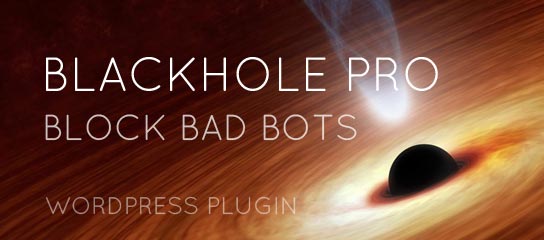
Image Courtesy NASA/JPL-Caltech. Update: Pro version now available! Check out Blackhole Pro » Finally translated my Blackhole Spider Trap into a FREE WordPress plugin. It’s fun, fast, flexible, and works silently behind the scenes to protect your WordPress-powered site from malicious bots. Here are some of the features: Continue reading »
![[ 6G Firewall ]](https://perishablepress.com/wp/wp-content/images/2016/6G-firewall.png)
After three years of development, testing, and feedback, I’m pleased to announce the official launch version of the 6G Firewall (aka the 6G Blacklist). This version of the nG Firewall is greatly refined, heavily tested, and better than ever. Fine-tuned to minimize false positives, the 6G Firewall protects your site against a wide variety of malicious URI requests, bad bots, spam referrers, and other attacks. Blocking bad traffic improves site security, reduces server load, and conserves precious resources. The 6G […] Continue reading »
![[ Enable WP Database Tools ]](https://perishablepress.com/wp/wp-content/images/2018/enable-database-tools.jpg)
Here is a lightweight WordPress plugin that enables you to optimize and repair InnoDB and MyISAM database tables. It uses WordPress’ built-in database optimization tools to get the job done. There are lots of great database optimization plugins out there, but this one is aimed specifically at easily optimizing and repairing InnoDB tables. Although it also works on other types of tables, such as MyISAM. Continue reading »

s2Member (s2) and Easy Digital Downloads (EDD) are two of the top eCommerce plugins for WordPress. I’ve been using both plugins for quite awhile now and would like to explain some of their main differences. Both plugins are awesome in their own right, but there are some clear distinctions that could make one or the other an ideal choice depending on the scope and goals of your project. Hopefully the following comparison will help anyone out there arrive at the […] Continue reading »

If you are new to WordPress, or even if you have some experience, it may seem impossible to figure out why something isn’t working as expected. It would be nice if we could just wave a magic wand and have everything “fixed” automatically, but reality requires a bit more effort to diagnose and resolve issues. It would be impossible to describe troubleshooting steps for every possible issue, so this post stays focused on troubleshooting things in general. The goal here […] Continue reading »
The free version of my WordPress plugin User Submitted Posts is better than ever, with a wealth of new action and filter hooks, enabling developers to customize everything from shortcode output to post data, alert messages and more. Drop in for a quick summary of all new USP hooks. Continue reading »
 Perishable Press is operated by Jeff Starr, a professional web developer and book author with two decades of experience.
Here you will find posts about web development, WordPress, security, and
Perishable Press is operated by Jeff Starr, a professional web developer and book author with two decades of experience.
Here you will find posts about web development, WordPress, security, and